


During my research on myocarditis and its correlation to the COVID-19 vaccine and teens, I noticed that pericarditis was also on the CDC’s list of possible COVID-19 mRNA vaccine complications. Please feel free to read my previous blog post about myocarditis – but here, we’re going to jump into learning about what pericarditis is and danger signs to look out for that might tell you that you have it.
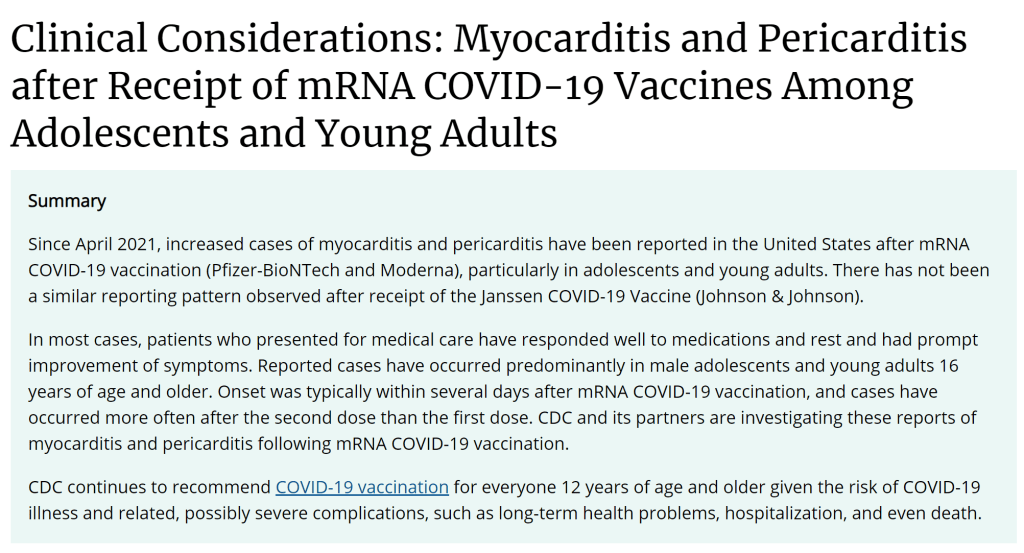
Slight detour here – but I think it’s pretty fascinating that increased rates of myocarditis and pericarditis have only been found with mRNA vaccines. I wonder what the composition of the Johnson & Johnson vaccine is, and what conditions patients who receive the Johnson & Johnson vaccine might be more prone to contracting.
So what is pericarditis? Here are the fast facts: the Mayo Clinic says pericarditis is:
- Swelling/irritation of the thin tissue surrounding the heart, called the pericardium
- Symptoms of pericarditis include significant chest pain, usually located in the left side of a patient’s chest behind the sternum
- This chest pain comes as a result of swollen layers of the pericardium rubbing against each other
Mayo Clinic also says that typically, pericarditis isn’t a severe condition and usually goes away without treatment. But if you do have a more severe form of the condition, doctors may prescribe you medication, and, sometimes even surgery. What’s more worrying is that pericarditis may pop up as result of a heart attack or a pulmonary embolus (blood clot on the lungs). That’s why it’s recommended that you should always seek proper medical treatment if you have any symptoms of pericarditis – it might be more serious than just inflammation of the tissue around the heart. Also disclaimer for you all – I am not a doctor and do not claim to be one! This blog is just purely for fun and educational purposes. But this is not a substitute for medical advice! Ask a doctor if you have real questions!
Back to pericarditis. There are four main types of this condition:
- Acute Pericarditis: lasts up to 3 weeks, can commonly be confused with chest pain after a heart attack
- Recurrent Pericarditis: shows up 4-6 weeks after having acute pericarditis, without any symptoms of pericarditis in between episodes
- Incessant Pericarditis: lasts between 4-6 weeks and 3 months, with consistent, recurring symptoms.
- Chronic Constrictive Pericarditis: develops gradually and remains for a period of longer than 3 months

“Pericardium.” Wikipedia, Wikimedia Foundation, 20 June 2021, en.wikipedia.org/wiki/Pericardium.
Above is a diagram of a healthy pericardium…and here’s another one!
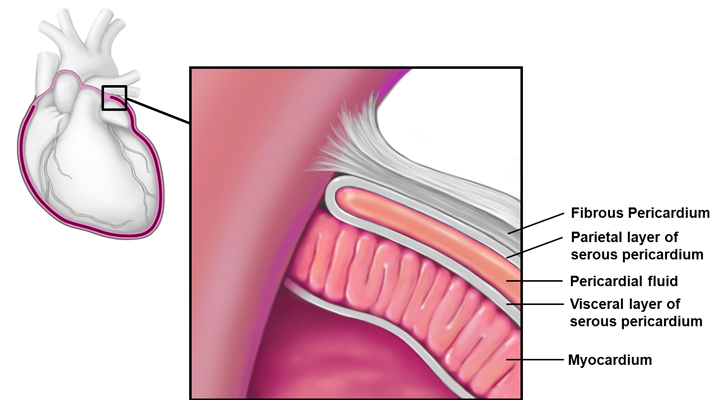
Phelan, Dermot, et al. Pericardial Disease, http://www.clevelandclinicmeded.com/medicalpubs/diseasemanagement/cardiology/pericardial-disease/.
Pericarditis is when the pericardium shown above is inflamed. Now we’ve covered a brief overview of the condition itself…but what about how it connects to parents debating whether to get their children the COVID vaccine? At my high school specifically, it’s required for students to get vaccinated before coming back to school in the fall (with religious and medical exemptions). I know that’s a big factor to consider if the schools other children are going to are also enforcing this policy, but the possibility of contracting myocarditis and/or pericarditis are also pretty serious. Especially since myocarditis can lead to strokes or heart attacks that can be fatal! So I figured it would be a good idea to see if I could find the rates at which kids are known to get myocarditis and pericarditis.
Okay here are the stats… so about 12.6 cases have been found per million people to get myocarditis (according to Yale Medicine) after receiving the second dose of the COVID vaccine. Another article from AAPublications writes that federal officials have confirmed 226 cases of myocarditis or pericarditis in people ages 30 or under who have received an mRNA vaccine, as of June 10, 2021. Writer Melissa Jenco says that officials are still investigating 250 more reports.
My personal takeaway is that the probability of getting myocarditis and pericarditis are both extremely rare, but I understand that’s also the view of someone who’s already decided to receive both doses of an mRNA COVID vaccine. Not much I can do about it now, can I? All I can do is take the safety precautions recommended by the Mayo Clinic, like maintaining good hygiene and staying away from people with flu symptoms (which I kind of have to do anyway…you know, COVID). But for people, namely parents, who are debating whether or not to get their child the vaccine, here’s what Doctor Asnes from Yale Medicine says on the topic:
“This is an incredibly rare event…I think the most important message at this point is that we are still recommending eligible people older than 12 follow the vaccine recommendations from the CDC. While we are taking these reports of myocarditis very seriously, we – along with the CDC – continue to feel that the benefits of being vaccinated against COVID-19 far outweigh the very small risk of getting myocarditis related to the vaccine itself.” – Dr. Jeremy Asnes, MD
Moriarty, Colleen. “The Link Between Myocarditis and COVID-19 MRNA Vaccines.” Yale Medicine, Yale Medicine, 24 June 2021, http://www.yalemedicine.org/news/myocarditis-coronavirus-vaccine.
Again, I’m not a doctor – but from this research, it definitely does seem like both myocarditis and pericarditis are entirely treatable conditions if caught early. And because the symptoms include acute chest pain and swelling in the legs, ankles, and feet I would imagine most cases would be relatively easy to notice. So I wonder how parents feel about these conditions…are they willing to take the risk with the vaccine? I did a little research to try about find an article where a parent expressed their view on the topic, but unfortunately I wasn’t able to come up with anything. But that definitely would be an interesting perspective!
To summarize – myocarditis and pericarditis: 2 conditions that have been discovered to be linked with the mRNA COVID vaccines. I feel like it’s been really good to learn more about both of these conditions, but it also brings up a lot of questions for me about whether parents are going to decide to vaccinate their kids with this information.
 History/Philosophy of Science with Gabi